Everything you need to plan a night out in Toronto, from the neighbourhoods and the music to the dress code, the door, and how the guestlist and bottle service really work. Written by the people who actually show up, every weekend, on the busy nights.
TT By the TopTorontoClubs teamUpdated July 202611 min readWe actually go out
Toronto does not have one nightlife scene, it has four or five that barely overlap, and the best night of your life and the worst one can sit two blocks apart. The same Saturday, one strip is a dressed-up, bottle-flowing see-and-be-seen run, the next is a sweaty hands-up rap floor, and a third is a cheap local bar where nobody checks your sneakers. The city rewards people who know which door to pick, and it punishes the ones who show up at midnight with no plan and the wrong shoes.
This guide is the whole map. We break down the neighbourhoods and what each one decides about your night, the music you will hear and where, what to wear so the door says yes, when to actually arrive, and the two systems that run Toronto nightlife: the free guestlist and bottle service. It is built from countless weekends standing in these lines, working these doors, and watching which floors fill and which empty out by 1am. No paid placements, no fluff. By the end you will know exactly how to plan a night here and walk in clean.
The neighbourhoods, decoded
Knowing the neighbourhoods is half the battle, because the strip you pick decides the crowd, the music and the price of your night before you reach a single door. Toronto nightlife clusters into a few distinct runs, each with its own personality, and they barely bleed into each other.
King West and the Fashion District are the main event. This is a dense, walkable run of upscale basement rooms and rooftops where the dress code matters and the bottle service flows. The clubs sit within a few blocks of each other, so you can move between them on foot, and the crowd comes polished and ready to spend a little. Come here when you want the night to feel like an event: sharp outfits, big sound, a door that wants you to have tried. It is the strip where 44, Lavelle, Century and DPRTMNT all live, and it sets the standard the rest of the city is measured against.
The Entertainment District, around Pearl, Richmond and Adelaide, runs younger and bigger. The rooms are large, the crowds skew toward students and first-year clubbers, and the doors are easier. This is where most of the city learns how to club before graduating west to King. It is loud, high-energy, and forgiving, the right call for a big group, a birthday, or a first real night out where you want fun over polish.
Queen West, Parkdale and Ossington run younger and looser. The rooms lean hip-hop and trap, the energy is hands-up, and nobody is checking if your sneakers are clean. This west-end orbit is the right move when you want a real party over a polished one, or a cheap local night over a 40-dollar cover. It runs the gamut from proper rap floors to cocktail dens to come-as-you-are dive bars, all of it more relaxed than the King West machine.
Beyond the core, the city spreads out. Yorkville and the Annex run grown-and-sexy lounges and rooftops, the waterfront and Polson Pier host the massive summer warehouse and pool parties, and the suburbs from Mississauga to Scarborough have their own scenes. But for most nights out, the three core strips above are where you start.
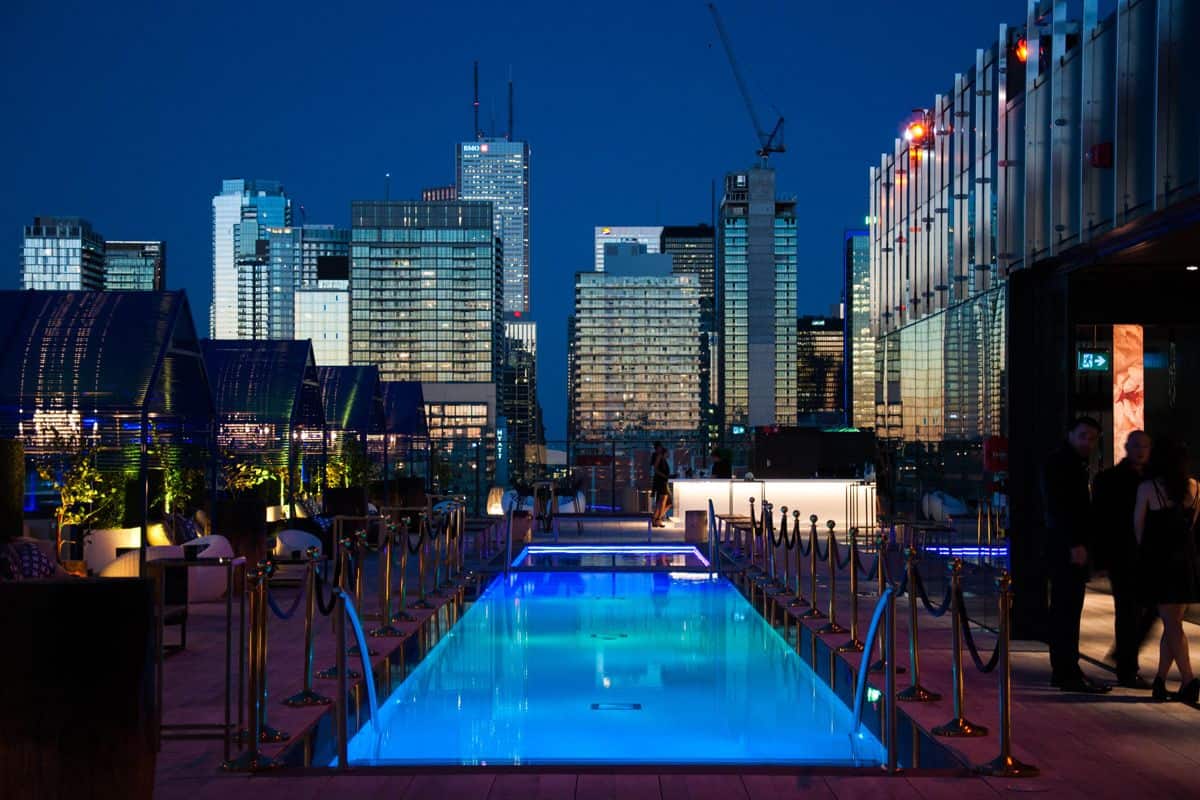
Lavelle, the King West rooftop, with the CN Tower behind the crowd. King West is the dense, walkable heart of Toronto nightlife.
Match the music to the room
In Toronto, the music is tied to the room and the neighbourhood, not the night of the week. Most clubs run a fixed sound, so picking the right room is how you pick your soundtrack. Show up to the wrong one and you will spend the night wishing you had gone two blocks over.
Hip-hop, trap and R&B are the dominant sound of Toronto nightlife, and the heavy hitters are spread across the city. On King West, Lavelle leads with rooftop hip-hop and R&B. In the west end, AMPM in Parkdale and Apt 200 on Queen West are the rap-every-word rooms. Century blends hip-hop and Top 40 for a younger King West crowd. If you want to hear the songs you actually know every word to, this is the lane, and it is the easiest sound to find on any given weekend — our best hip-hop clubs in Toronto guide breaks down every rap room by strip.
EDM, house and electronic live in fewer but bigger rooms. DPRTMNT on King West is the city's purpose-built big-room EDM cathedral, with a sound system tuned for house and a real stage for name DJs. For massive warehouse and pool-party EDM, the waterfront venues like Rebel and Cabana run the biggest shows in the summer. This is the lane where you should check who is spinning before you commit, because the night lives or dies on the booking.
Top 40 and open-format is the safe, crowd-pleasing middle, and most clubs lean on it to keep a mixed room moving. It is the default at the Entertainment District rooms like Fiction, and at most rooftops and lounges. If you are in a group with mixed taste, a Top 40 room keeps everyone happy.
Latin, soca and dancehall have a deep, dedicated scene, especially around College Street, Little Italy and the west end, and they surge during Caribana season. There are also specialist rooms for country, disco, and live music, so whatever you are chasing, there is almost certainly a dedicated floor for it somewhere in the city.
Quick tip: Before you commit to a room, check whether the night is a regular weekend or a ticketed event. On artist and concert nights at the big EDM venues, entry is priced separately and the free guestlist does not apply, so a quick look at the lineup saves you a surprise at the door.
Rooms worth your night
You do not need a hundred options, you need the handful that consistently deliver. These are some of the rooms we send friends to, spread across the strips and sounds so there is one for whatever night you want. Each links to its full rundown with the current cover, hours and how to get on the list.
44 Toronto
King West's premium crown jewel
King West · Fashion District
SoundHip-Hop, EDM, Top 40
CrowdUpscale pros, 21-35+
DressSharp, see-and-be-seen
Best forA premium night out
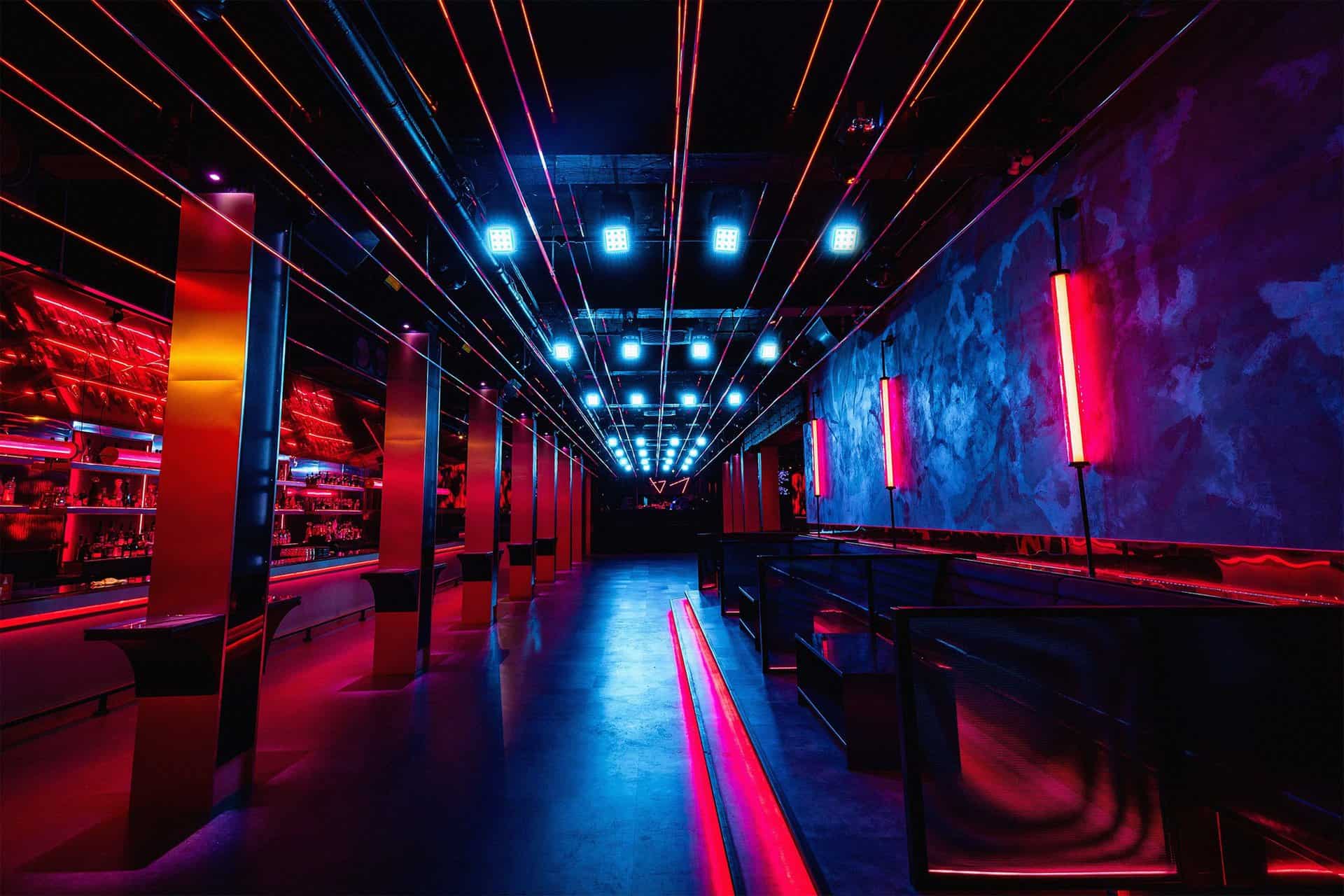
The basement room under Lavelle at 627 King West is the one everything else on the strip gets measured against. Dark, neon-washed, CO2 cannons on the drops, and at capacity by 1am most weekends. It is guestlist and bottle service only, the crowd comes to show out, and nothing in the city does the full see-and-be-seen night better. Steep cover and a strict door, so plan it and arrive early.
INK Entertainment gutted the old Toybox at 473 Adelaide and rebuilt it as a full performance venue tuned for house and electronic sets. It holds 800 to 1,000 and uses every inch on a weekend. The night lives or dies on who is spinning, so check the lineup, but when the booking is right the energy is unmatched in the city. The one room that delivers real big-room EDM at scale.
The rooftop, full stop. Ride the elevator to the top of 627 King West and step onto an open patio with reflecting pools and a straight-on view of the CN Tower. By night it flips into a lounge-meets-club for a dressed-up crowd that wants hip-hop and R&B with the skyline as a backdrop. Summer Saturdays are the peak; the open half shuts down in winter. Dress sharp, the door is picky.
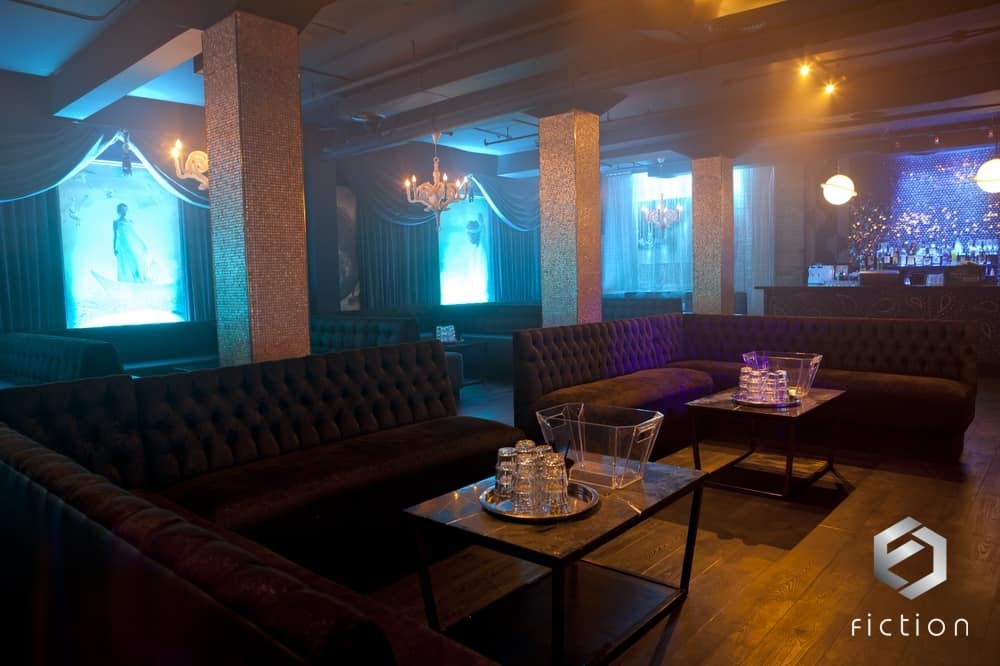
The Entertainment District starter club: a big two-floor room on Pearl Street that runs young, loud and rowdy, with cheap booths from around 170 dollars. It does its job better than the other rooms in the district, with floors that stay full and an easy door. If you are 19 to 21 and want to see what Toronto clubbing is about, this is the obvious first stop. Over 21 and after polish, look elsewhere.
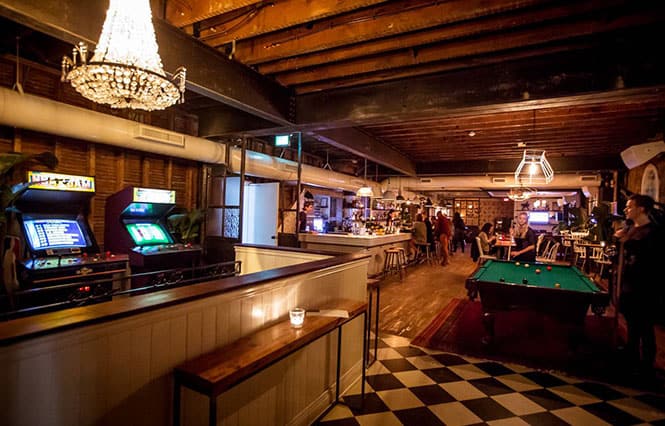
The top floor at 1034 Queen West is decked out like someone's trendy apartment: a living-room setup, a pool table, a TMNT arcade game by the door. It genuinely feels like a house party that happens to have a coat check, which is exactly why people keep coming back. Cheap cover, hip-hop and R&B, and a casual crowd. The catch is the famously slow door, so use the free guestlist to cut the wait.
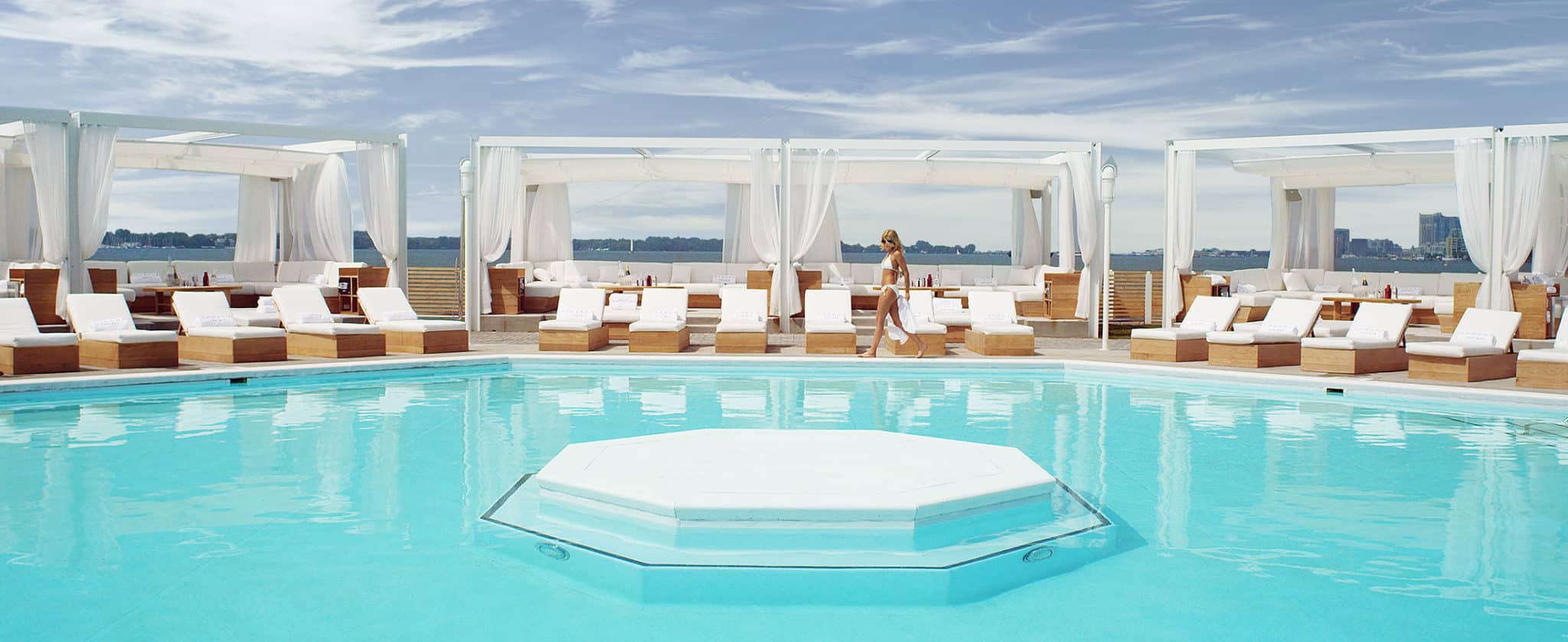
When the weather turns, the night moves to the water. Cabana is the marquee summer day-party on Polson Pier: a pool, a waterfront patio, big DJ bookings, and a dressed-up crowd that treats a Saturday afternoon like a main event. It only runs in the warm months and the best dates sell out, so it is a plan-ahead, book-a-cabana move rather than a walk-up. The signature Toronto summer flex.
A packed weekend at DPRTMNT. Big-room EDM nights live or die on the booking, so check the lineup before you commit.
What to wear, by strip
Dress code in Toronto is not one rule, it is a sliding scale that climbs as you move toward King West. Getting it right is the single easiest thing you can do to make sure the door says yes, and getting it wrong is the most common reason people get turned away.
King West and upscale rooms want clean and sharp. For men that means a fitted shirt or a nice top, clean dark jeans or trousers, and presentable shoes. Leave the sportswear, gym clothes, baggy fits and beat-up sneakers at home. A few rooms are stricter still: Paris Texas runs collared and no sneakers outright, and some premium rooms turn away anything that reads too casual. For women the range is wider and more forgiving, but the room still skews dressed-up, so lean stylish.
The Entertainment District is a notch more relaxed, since the crowd is younger, but clean and current still gets you in faster than gym fits. Queen West, Parkdale and Ossington are the most forgiving, where streetwear flies and a clean pair of sneakers is fine. The come-as-you-are bars in this orbit genuinely do not care. Even so, looking like you made an effort never works against you anywhere in the city.
The universal rule: when in doubt, dress up. It is far easier to talk your way past a door looking sharp than to argue your way in looking like you rolled off the couch. Dress for the strictest room you might end up at, not the loosest.
Door-friendly group tip: Lopsided groups are the hardest to get in. A big group of guys with no women will wait longer or get turned away at picky doors, while a balanced group walks in faster. If your crew is guy-heavy, the free guestlist and a booked booth do most of the work the door is worried about.
Timing the night right
Timing is the part most people get wrong, and it is the difference between walking in and freezing in a line. Toronto clubs open their doors around 10pm, but the floor does not really fill until 11:30 or midnight, and last call across Ontario is 2am, with the bigger rooms running music until 3am. That window is tighter than it looks, and the busy rooms cap out fast.
Arrive before 11. Almost every room wants you in before 11, and the busy ones are stricter. The premium spots want you in closer to 10:15, lines at the popular rooms can start by 10:45, and several guestlists close at 10pm sharp. The list does not save you if the room is already capped, so treat the cutoff as real. Roll up at midnight on a weekend and you are looking at a long line for a room that may already be full.
A good rule of thumb for the order of the night: drinks or dinner somewhere casual from 8 to 9:30, head to your first room by 10:30, and you are inside and settled before the rush hits at 11:30. If you are bar-hopping, do the room with the strictest door first while the line is short, then drift to the looser spots later when getting in is easy.
Sunday through Wednesday are quiet, with most dedicated clubs closed and the action in bars and lounges. Thursday is the sleeper night, busy enough to be fun but without the Saturday crush. Friday and Saturday are the main events, when every room runs and the lines are longest. If you hate crowds and lines, a Thursday or a well-timed early arrival on the weekend is your friend.
How the guestlist actually works
The free guestlist is the cheat code of Toronto nightlife, and most people who complain about lines simply never use it. It is genuinely free, it is not a trick, and it is the single biggest thing you can do to make a night easier. Here is how it really works.
You get on the list before you leave the house, picking your club and your night in advance. Instead of waiting in the general line in the cold, you check in under your name at the door and get waved through to the faster guestlist entry. At many rooms it also waives or reduces cover, and at most it gets ladies in free before a cutoff time. There is no catch beyond the timing: the list has a cutoff, often 10pm, and it does not override a room that is already at capacity.
Two rules make it work. First, arrive before the cutoff. A guestlist spot is worthless if you show up after the list closes or after the room caps out. Second, if you are rolling deep or want a guaranteed spot, pair it with a booth. The list gets you and a normal-sized group in; a booked table with bottle service gets a big group in with a reserved spot waiting, no line at all. For most nights, the free list is all you need.
Bottle service, in plain terms
Bottle service is the other system that runs Toronto nightlife, and it is simpler than it sounds. You reserve a table or booth for your group, and in exchange you commit to a minimum spend, which you cover by buying bottles of liquor that come with mixers, ice, glassware and a server. It buys you a guaranteed reserved spot, skip-the-line entry for your group, somewhere to sit and keep your stuff, and a base of operations for the night.
Prices swing hard by room. A budget Entertainment District club starts bottles around 170 dollars, mid-tier King West and Queen West rooms run roughly 300 to 500 per bottle, upscale cocktail rooms set package minimums in the low thousands, and a premium room can run minimums from several hundred into the thousands depending on the night and the table location. The math that matters is per person: split across a group, a few hundred-dollar bottles can land at a reasonable per-head cost, especially when you factor in skipping cover and the line.
It is worth it for a celebration, a big group, a birthday, or any night you want guaranteed entry and a guaranteed spot without stress. It is not worth it for a casual two-person night, where the free guestlist does the job for nothing. If you want a table, the easiest move is to tell us the club, the night and your headcount, and we line up the right table and minimum so there is no guessing at the door. Our full bottle service guide breaks down the prices and rooms in detail.
Getting there and getting home
The three core strips, King West, the Entertainment District and Queen West, are close enough that you can bar-hop between rooms on foot, which is the whole appeal of starting downtown. Getting to and from them is the only logistics you really need to sort.
For getting there, the TTC subway and streetcars are cheap and reliable, running until roughly 1:30am, with the 24-hour Blue Night network of buses and streetcars after that. The King and Queen streetcars run straight through the heart of the club strips, so transit in is usually the easy move. For getting home from a club at 2 or 3am, a rideshare is usually the call, with the catch that surge pricing spikes hard right at last call when everyone empties out at once. If you can leave a few minutes before or after the 2am rush, you dodge the worst of it.
If you are driving, paid lots and street parking exist around all three strips but fill up and cost a premium on weekends, and you should never drive after drinking, so plan a rideshare or transit home and leave the car. A small bit of planning here, knowing your way home before you go out, is what keeps the end of the night from falling apart.
Plan it in two taps: Get on the free guestlist for any room above before you leave the house, and if you want a guaranteed spot for a group, book a booth with bottle service. Tell us the club, the night and your headcount and we line up the table and the minimum so there is nothing to figure out at the door.
Common questions
Toronto nightlife FAQ
What is the best area for nightlife in Toronto?
King West and the Fashion District are the main event: a dense, walkable run of upscale clubs and rooftops where the dress code matters and the bottles flow. The Entertainment District around Pearl and Richmond runs younger and bigger, the place most people learn to club. Queen West, Parkdale and Ossington run looser and hip-hop heavy, with easier doors and cheaper nights. Pick the strip that matches the crowd, the music and the budget you want.
What is the dress code at Toronto nightclubs?
It climbs as you move toward King West. Upscale rooms want clean and sharp, with no sportswear and no beat-up sneakers, and a few like Paris Texas run collared and no sneakers outright. Queen West, Parkdale and Ossington spots are more forgiving and streetwear friendly. When in doubt, dress up. It is always easier to get in looking like you tried.
What time do Toronto clubs open and close?
Most clubs open their doors around 10pm and last call for alcohol is 2am everywhere in Ontario, with bigger rooms running music until 3am. The floor does not really fill until around 11:30, but you should arrive before 11 to beat the line, and earlier at the busy rooms where guestlists close at 10pm.
What is the legal age to get into a Toronto club?
It is 19-plus across the board, the Ontario drinking age, and the door checks valid ID. A few premium rooms run 21-plus for men. Bring real, government-issued ID, because photos of ID and expired cards get turned away.
How do I get on the guestlist for a Toronto club?
Get on the free guestlist before you leave the house, pick your club and night, and check in under your name at the door instead of waiting in the cold. It is genuinely free. Two rules make it work: arrive before the cutoff, since many lists close at 10pm, and if you are rolling deep or want a guaranteed spot, book a booth with bottle service ahead of time.
How much does a night out in Toronto cost?
Cover runs from free, on the guestlist or at a no-cover bar, up to about 40 dollars at a premium King West room. Cocktails are usually 16 to 22 dollars, and a bottle of liquor with mixers runs from roughly 170 dollars at a budget room to thousands at a premium one. A casual night on the guestlist with a few drinks can run well under 100 dollars per person.
Is Uber or transit better for a night out in Toronto?
For getting there, the TTC subway and streetcars are cheap and run until roughly 1:30am, with the 24-hour Blue Night network after that. For getting home from a club at 2 or 3am, a rideshare is usually the move, though surge pricing spikes right at last call. The core strips are walkable between rooms, so plan to bar-hop on foot and rideshare home.
Keep reading
Related guides
Go deeper on the rooms, the rankings and how to book the night.
Toronto nightlife is not one thing, so I pulled together a range that spans King West bottle service, hip-hop rooms, rooftops and late-night lounges. Open any of these to see the vibe, the crowd and how to get in.
 King West · Fashion District